Introduction
Description
This free lab is great for Data Engineers, Analytics Engineers, and AI Engineers.
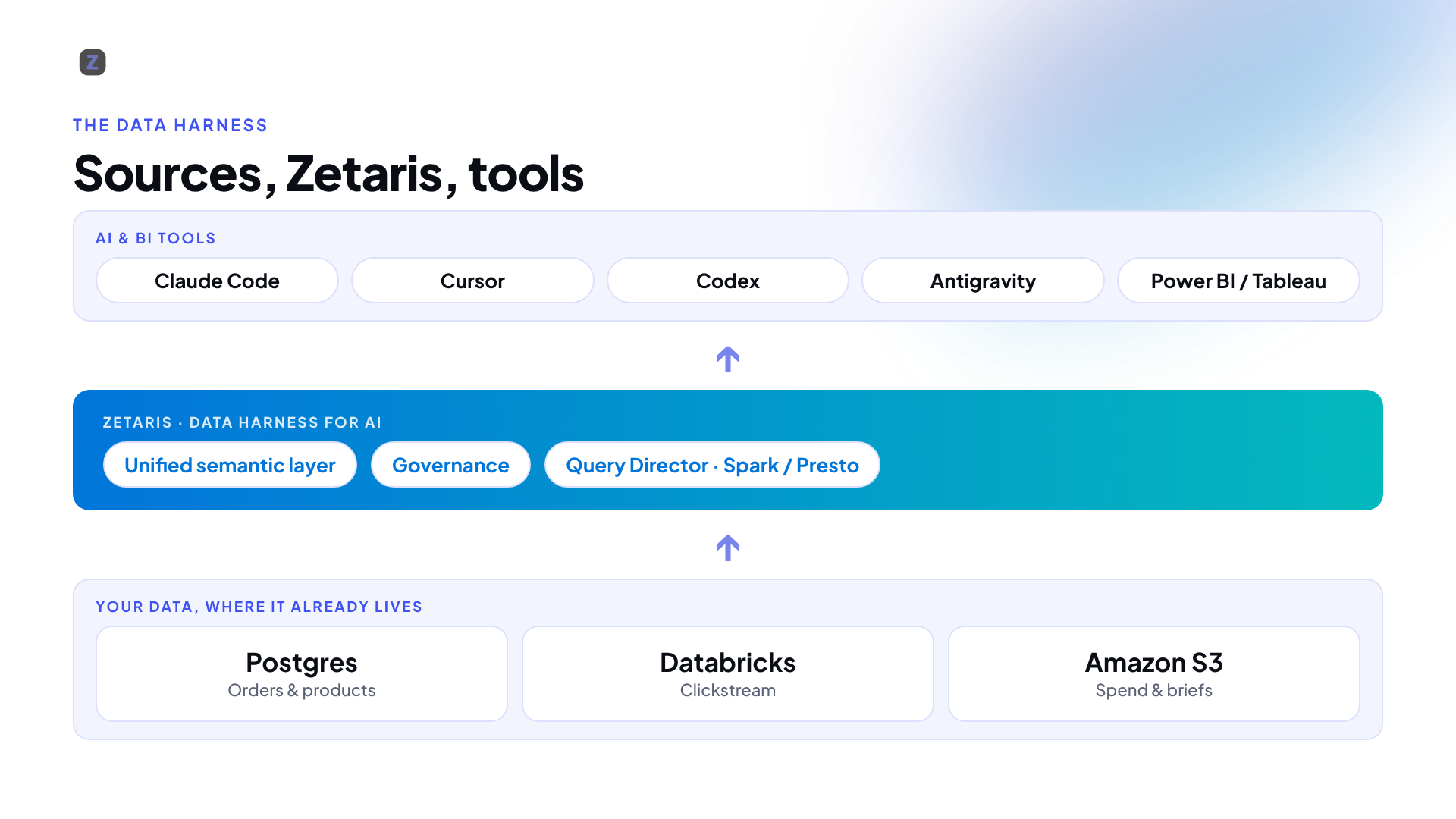
Everybody has AI tools now. Claude Code, Cursor, and Codex can write code and run queries in seconds. But inside a company, most AI projects don't get stuck on the model. They get stuck on the data. It's spread across several systems, nobody agrees on what revenue actually means, and security won't let an AI tool anywhere near the production database. This course gives you a practical, hands-on way to close that gap, using Zetaris as a data harness for AI: your data stays where it lives, and every AI agent and BI tool works on one shared, governed definition of it.
You will deploy Zetaris Cloud into your own AWS account on the free Hobby tier, connect a realistic retail dataset spread across Aurora Postgres, Amazon S3, and Databricks, and query all three in a single SQL statement without copying a single row. You will then build a unified semantic layer with business names, keys, descriptions, and data quality rules, lock down exactly what an AI is allowed to see, bring the same metric live into Tableau, and finally connect Claude Code, Cursor, Codex, and Google Antigravity to ask real business questions in plain English.
By the end, you will understand what it really takes to make data AI-ready, connected, meaningful, and governed, and you will have a working setup where four different AI agents come back with the same numbers, because the definitions live in one place.
What You'll Learn in This Course
The Problem: Why AI Tools Get Stuck on Your Data
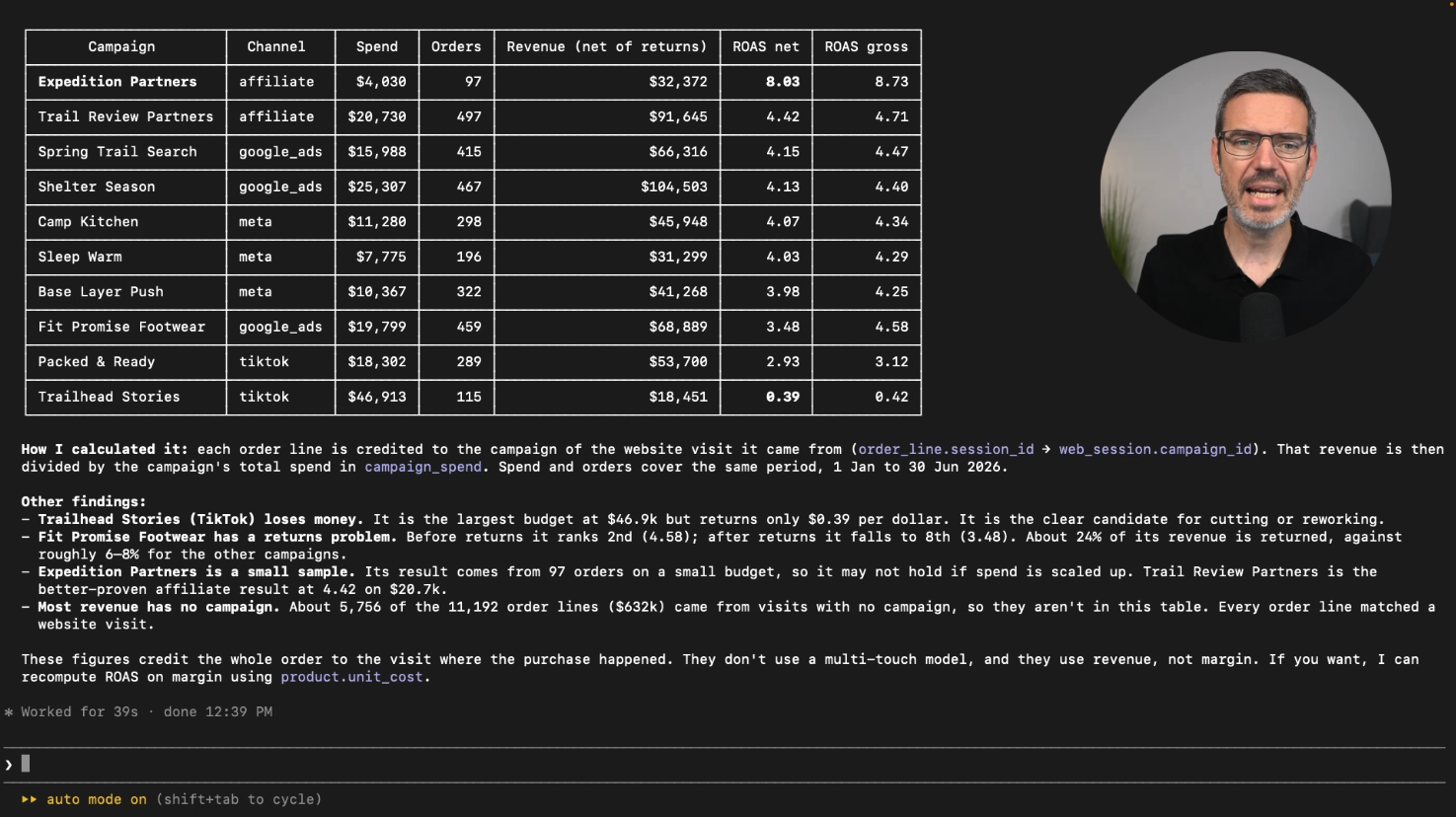
You will start by watching Claude answer a real business question that needs orders from Postgres, clickstream events from Databricks, and ad spend from S3, and you'll see a campaign that looks great on revenue drop to eighth place once returns are counted. You will learn the three things AI readiness actually requires, connected, meaningful, and governed data, and why twelve point-to-point integrations between tools and sources don't scale, while one unified semantic layer does.
How a Data Harness for AI Works
Before building anything, you will get a clear mental model of the data harness idea: your data stays where it is, and Query Director sends each workload to the right compute engine, like Spark for the heavy jobs. You will also see how Zetaris differs from centralization-first platforms like Databricks and Snowflake, and why it works next to them rather than replacing them.
Deploying Zetaris Into Your Own AWS Account
You will sign up for the free Hobby tier, connect your AWS account with a CloudFormation stack, and deploy a Zetaris cluster into your own VPC, including how to fix the AWS vCPU limit if you hit it. You will then set an auto-suspend schedule so your cluster only runs when you need it, and take a quick tour of the platform: data sources, the workbench, data products, and the Data Explorer.
Setting Up and Connecting Your Data Sources
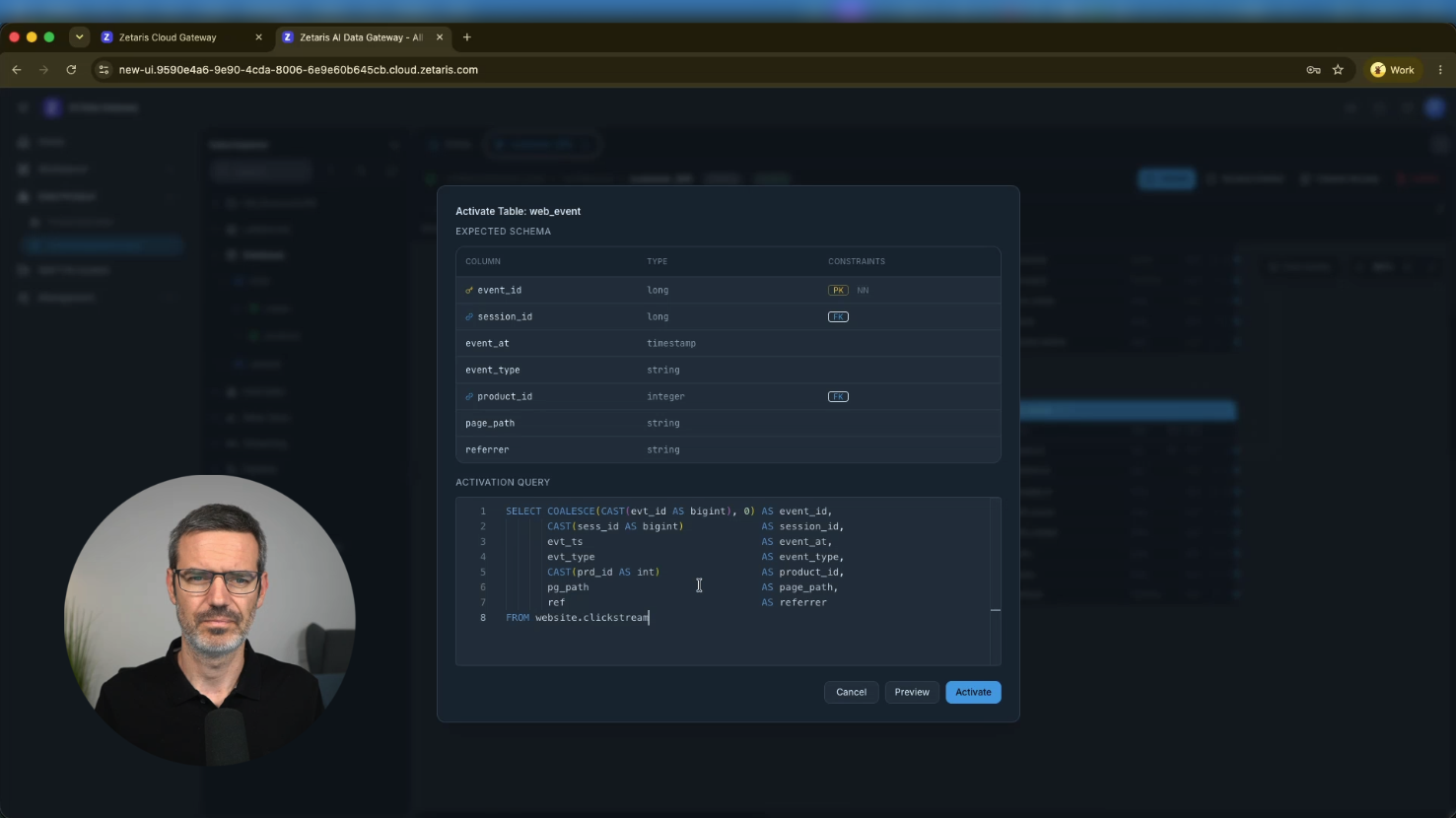
You will work with the Northbound Outfitters retail dataset from the course repository. You will load the shop's products and orders into Aurora Postgres, upload the marketing spend and campaign briefs to Amazon S3, and load two million clickstream events into Databricks Free Edition. Then you will register all three as data sources in Zetaris with least-privilege access and a service principal, and check each one with a live query.
Building a Unified Semantic Layer
You will start with one simple question that has three correct answers: how many customers do we have? From there you'll learn why AI needs one definition in one place, and how the semantic layer, data marts, and data products relate. You will build a Customer 360 semantic layer from six tables across three systems, replace cryptic column names with business names, and declare the relationships between them, without copying a single row.
Running Federated Queries with Query Director
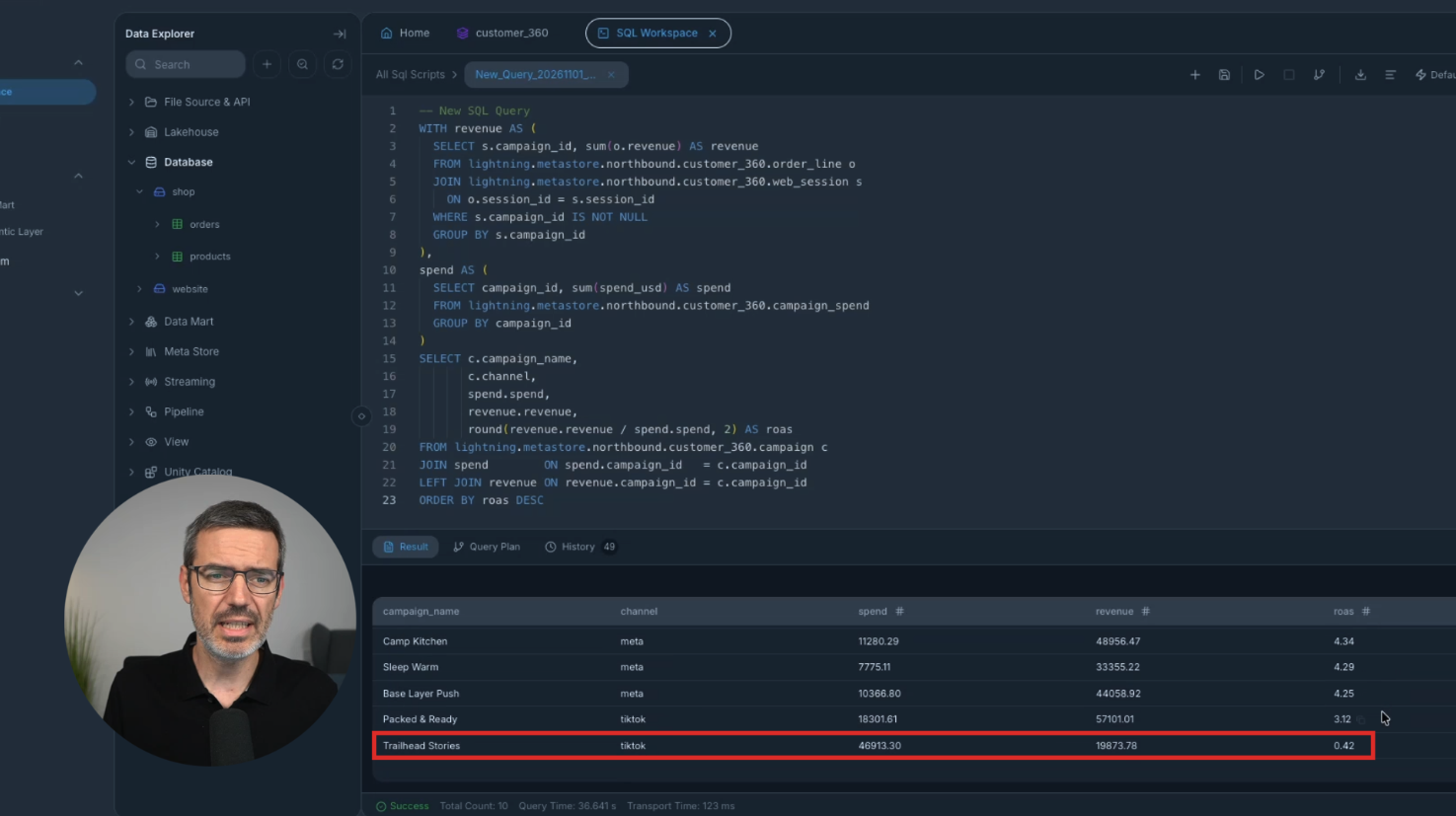
You will answer which campaign brings back the most revenue per dollar spent with one SQL query across Postgres, S3, and Databricks. Along the way you will learn how to avoid the classic double-counting trap in marketing analytics, and how to see which engine actually runs your query.
Making Your Data Meaningful and Trustworthy for AI
You will add descriptions to tables and columns so an AI knows what revenue really includes, run the data quality rules Zetaris generates from your keys, and add a business rule of your own, so you know how far you can trust each table.
Governing What the AI Is Allowed to See
You will create a dedicated role, user, and API token for AI agents, grant read-only access to the semantic layer, and deny a sensitive column that never leaves Zetaris. Then you will watch Claude run into exactly that limit.
Bringing One Metric to Your BI Tool
You will publish return on ad spend as a view, package it in a data mart, and build a live Tableau dashboard on the very same definition your AI agents use, so dashboards and agents always show the same number.
Connecting Claude Code, Cursor, Codex, and Google Antigravity
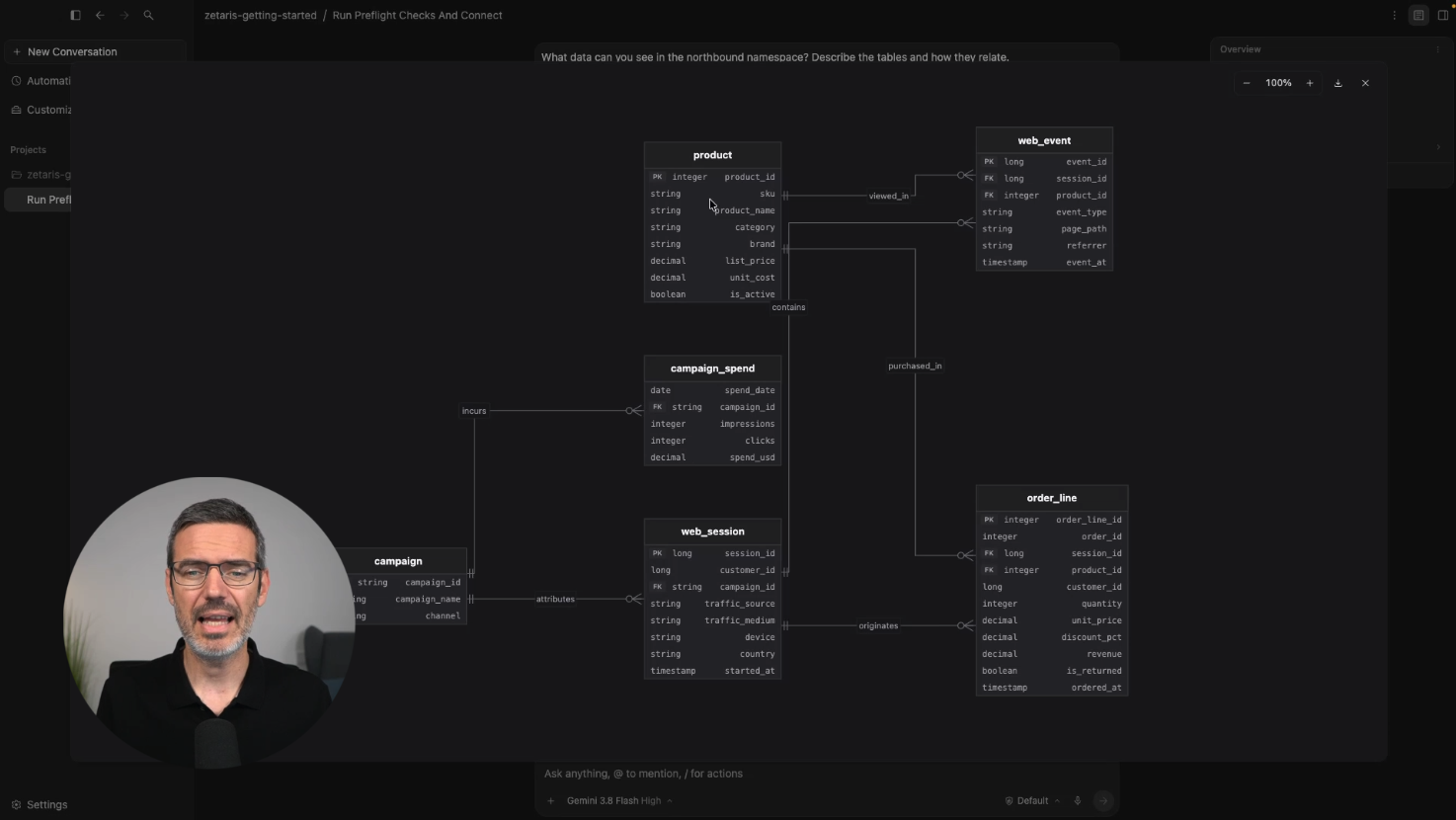
You will connect four AI agents to Zetaris using the getting-started repository, an AGENTS.md file, and a governed API token, and use the same three prompts in every tool. Claude Code explores the semantic layer and answers the return on ad spend question in plain English, Cursor draws an ER diagram of your model and a live dashboard of the result, Codex spots the double-counting trap before it runs the query, and Google Antigravity, powered by Gemini, gets the same answer again. You will check every agent's answer against your own SQL.
Wrapping Up and Cleaning Up
You will review the five key takeaways, see what's next on the Zetaris roadmap, get four questions to try with your own agent, and tear down your AWS resources step by step so nothing keeps billing you.
Who This Course is For
This course is for data engineers, analytics engineers, and AI engineers who want AI agents to work on real company data and give answers they can actually trust.
Specifically, this course is for those who want to:
- Understand what makes data AI-ready: connected, meaningful, and governed
- Query Postgres, S3, and Databricks together in one SQL statement without moving or copying data
- Build a unified semantic layer with business names, relationships, descriptions, and data quality rules
- Control exactly what an AI agent is allowed to see with roles, read-only access, and column-level rules
- Give dashboards and AI agents one shared metric definition, so everyone sees the same number
- Connect Claude Code, Cursor, Codex, and Google Antigravity to governed business data
No prior experience with Zetaris is required. You need basic SQL and terminal skills, a verified AWS account (expect small AWS costs, I'll show you how to keep them low), free accounts on Zetaris Cloud and Databricks Free Edition, plus Git, Python 3, and psql installed. For the agent lessons you need at least one of Claude Code, Cursor, Codex, or Google Antigravity. Tableau is optional.
I'll teach you everything step by step while working with a realistic retail dataset throughout the course.
Curriculum
Get Certified as a Data Harness Solution Developer
Everyone who completes the course can receive a certificate that recognizes them as a Data Harness Solution Developer, ready to share on LinkedIn. Just reach out to Zetaris once you’ve finished, and they’ll send you the instructions on how to get your certificate.
Start Now:
Make Your Data AI-Ready: Zetaris Cloud, Claude, Cursor, and Power BI is included in our Free Labs Bundle